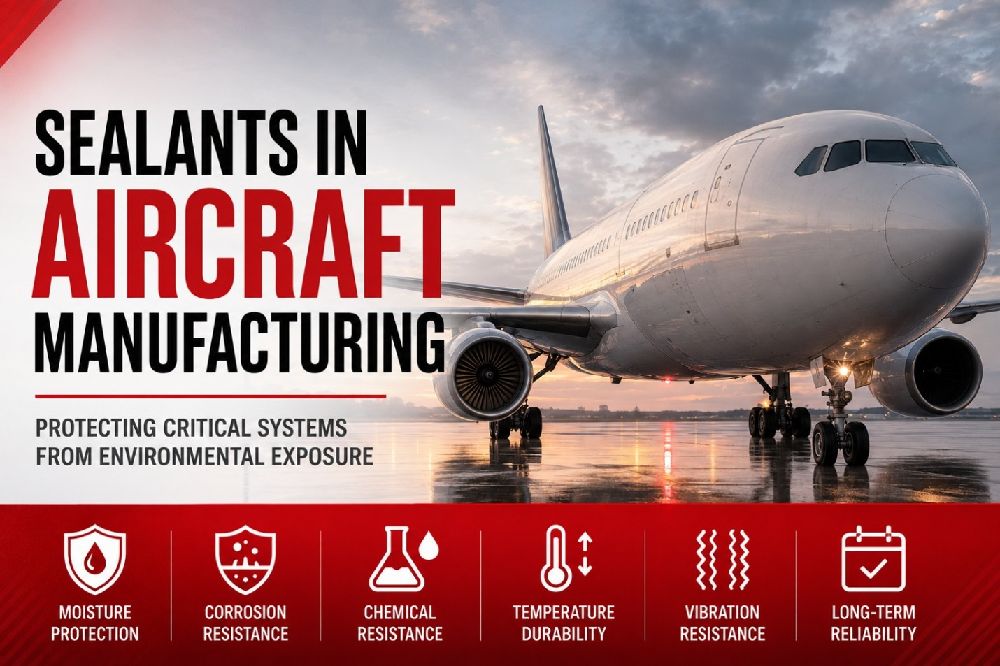
Sealants in Aircraft Manufacturing: Protecting Critical Systems from Environmental Exposure
Modern aircraft are engineered to perform in some of the world's most challenging environments. From extreme temperatures and high-altitude pressure changes to moisture, chemicals, vibration, and UV exposure, aerospace components face constant environmental stress throughout their service life.
To maintain safety, performance, and reliability, manufacturers rely on high-performance aerospace sealants to protect critical systems and prevent environmental contaminants from compromising aircraft components.
Whether used in airframes, avionics, fuel systems, or electronic assemblies, today's aircraft sealing compounds play an essential role in aerospace manufacturing and maintenance.
Why Sealants Matter in Aerospace Applications
Aircraft contain thousands of joints, seams, connectors, fasteners, and electronic components that require protection from environmental exposure. Even small gaps can allow moisture, dust, chemicals, or corrosive substances to enter sensitive areas and create costly performance issues.
High-quality aviation sealant materials help manufacturers:
- Prevent moisture intrusion
- Protect against corrosion
- Resist fuels, oils, and hydraulic fluids
- Improve durability in harsh environments
- Reduce maintenance requirements
- Extend component service life
By creating a protective barrier between critical systems and external conditions, sealants help improve both safety and long-term reliability.
Common Aerospace Sealing Applications
Avionics and Electronic Systems
Modern aircraft rely on sophisticated electronic systems for navigation, communication, monitoring, and flight control. These sensitive components must remain protected from moisture, dust, and vibration.
Sealants help safeguard electronic enclosures, connectors, and wiring assemblies while supporting reliable long-term operation.
Airframe Sealing
Aircraft fuselages, access panels, doors, and structural assemblies contain numerous joints that require protection from environmental exposure. Proper sealing helps prevent water ingress and minimizes the risk of corrosion developing over time.
Fuel System Protection
Fuel tanks, fuel lines, and related assemblies require sealing materials capable of withstanding prolonged exposure to aviation fuels and aggressive operating conditions.
Sensors and Instrumentation
Many aerospace sensors operate in demanding environments where exposure to moisture, chemicals, or contaminants could affect performance. Sealants help protect these components while maintaining system accuracy and reliability.
Key Properties of Aerospace Sealants
Not all sealants are suitable for aerospace applications. Engineers typically look for several important performance characteristics when selecting sealing materials.
Chemical Resistance
Aircraft components may encounter fuels, hydraulic fluids, lubricants, cleaning agents, and de-icing chemicals. Aerospace sealants must maintain performance despite regular exposure to these substances.
Temperature Resistance
Aircraft experience extreme temperature fluctuations during operation. Sealants must remain flexible and effective across a broad temperature range without cracking or degrading.
Vibration Durability
Continuous vibration is a normal part of aircraft operation. Sealants must withstand repeated movement and stress while maintaining a reliable seal.
Moisture Protection
Preventing water intrusion remains one of the primary functions of aerospace sealing materials. Effective moisture resistance helps reduce corrosion risks and protect sensitive equipment.
Selecting the Right Aircraft Sealing Compound
The ideal sealing solution depends on several factors, including operating conditions, substrate materials, chemical exposure, and environmental requirements.
For aerospace manufacturers seeking reliable sealing technologies, Hernon offers a variety of solutions.
- Sealants
- Gasketing
- Structural Adhesives
- Epoxy Adhesives
Protect Critical Aerospace Systems with Hernon
Environmental exposure is an unavoidable reality in aviation. The right aerospace sealants help protect critical aircraft systems from moisture, chemicals, vibration, and temperature extremes while supporting long-term reliability and performance.
Hernon provides advanced sealing and bonding technologies designed to meet the demanding requirements of aerospace manufacturers. Whether you're protecting avionics, sealing structural assemblies, or enhancing system durability, our team can help identify the right solution for your application.
Contact Hernon today to learn more about our aerospace sealing solutions and discover the right products for your next aircraft manufacturing project.