Why UV Curing Adhesives Are Transforming Electronics Manufacturing
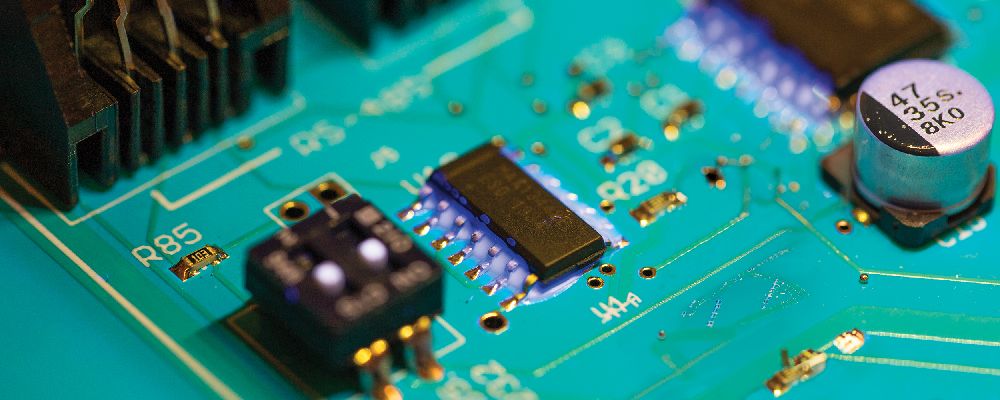
Modern electronics manufacturing requires bonding solutions that deliver both speed and precision. Traditional adhesives often require extended curing times, which can slow production and increase manufacturing costs.
UV curing adhesives for electronics solve this challenge by enabling near-instant curing when exposed to ultraviolet light.
How UV Adhesives Work
UV curing adhesives remain liquid until exposed to UV light, which triggers rapid polymerization and hardening.
This technology allows manufacturers to:
- Bond components instantly
- Improve assembly speed
- Reduce production bottlenecks
These advantages make fast curing electronics adhesives ideal for high-volume manufacturing environments.
Benefits of UV Adhesives in Electronics
UV adhesives provide several advantages compared to traditional adhesive systems.
Key benefits include:
- Instant curing capability
- Precision bonding
- Reduced heat exposure
- Improved manufacturing efficiency
These features make UV adhesive for circuit boards particularly useful for delicate electronic components.
Electronics Applications
UV curing adhesives are commonly used in:
- Printed circuit board assembly
- Fiber optic systems
- Sensors and microelectronics
- Consumer electronics
Hernon offers specialized UV curing adhesives designed to meet the performance requirements of electronics manufacturers.
- Hernon UV Adhesives
- Electronics Bonding Solutions
As electronics continue evolving, manufacturers need bonding technologies that support faster and more efficient production.
UV curing adhesives provide the speed, precision, and reliability required for modern electronics manufacturing.